Gathering to Remember: How Families Are Reimagining the Traditional Funeral Reception

November 4, 2026

After a graveside service ends, many families find themselves reluctant to simply walk away. There is still something unfinished — not in a painful sense, but in a human one. People have come from near and far. Stories are surfacing. The quiet of the cemetery, which can feel so solemn during formal rites, sometimes opens into something gentler once the ceremony is over.

That lingering quality is prompting many families to think more carefully about what happens after the service — and, in some cases, to bring a portion of that gathering back into the memorial landscape itself.

What Is a Funeral Reception?

A funeral reception — sometimes called a repast, a celebration of life, or simply a gathering — is any informal coming-together that follows a memorial service or committal. There is no single right form. Some families host a reception at a private home. Others choose a restaurant, a community hall, or a house of worship. Increasingly, families are also asking whether some part of that gathering can happen outdoors, in the very place where their loved one now rests.

Receptions serve a quiet but important purpose. They give mourners time that the structured service cannot always provide — time to find one another, to share a memory that didn't fit into a eulogy, to simply sit together without an agenda.

Bringing the Gathering into the Memorial Landscape

Memorial parks and cemeteries have long been designed with more than burial in mind. Benches, garden paths, reflection pools, and shade trees create spaces that invite people to pause — not just on the day of a service, but in the weeks and years that follow.

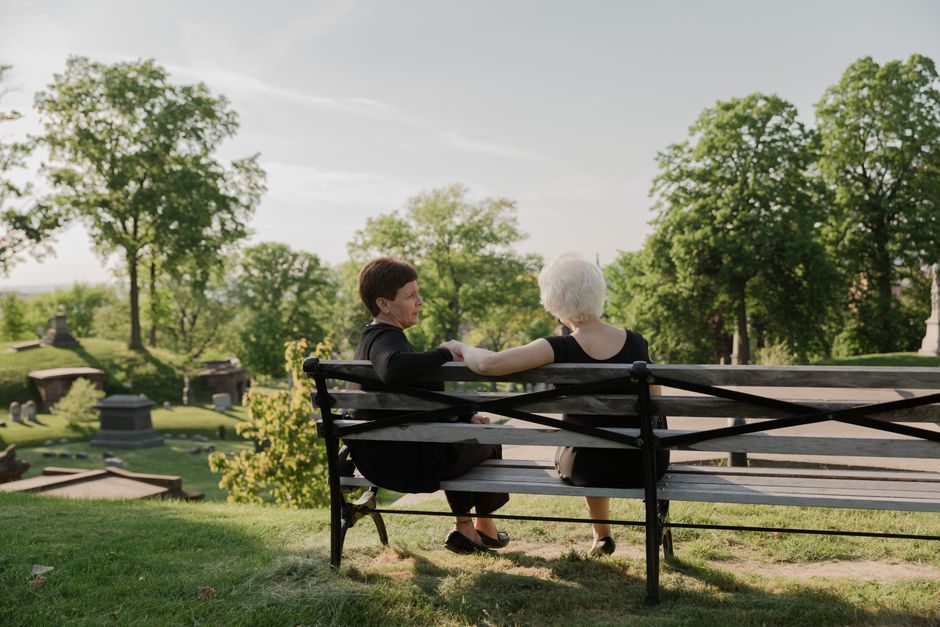
At Singing Hills Memorial Park, the natural setting is woven into the experience of remembrance. Families sometimes choose to extend their committal gathering into the surrounding grounds — walking together to a quiet bench, gathering near a garden area, or simply remaining in the landscape for a little while longer before the day ends.

If you are considering an outdoor or on-site element to your reception, a few gentle ideas are worth exploring:

  • A walking remembrance. After the committal, invite guests to take a brief, unhurried walk through the grounds together. This can be as simple as moving from the graveside to a nearby garden or reflection area, giving people a natural transition from ceremony to conversation.
  • A moment of shared silence. Before guests depart, a brief pause — perhaps a minute of quiet, or a simple reading — can help the group feel a sense of collective closure without requiring anyone to speak.
  • Nature-centered touches. Families have incorporated seasonal flowers, small seed packets, or stones gathered from meaningful places as ways of honoring a life in the outdoor setting. These gestures don't require elaborate planning and can feel deeply personal.
  • A small gathering near the memorial. Some families set up a simple folding table with photographs, a guestbook, or light refreshments near the committal area, allowing guests to linger and share memories before making their way to a larger reception elsewhere.

Coordinating With the Right Professionals

It is worth knowing that a cemetery and a funeral home are typically separate organizations with distinct roles. A cemetery — like Singing Hills Memorial Park — oversees the grounds, the committal process, and the long-term care of burial spaces. The funeral home your family works with handles the service planning, transportation, and many logistical details surrounding the day itself.

If you are hoping to incorporate an outdoor gathering or extended time on cemetery grounds into your reception plans, the best first step is to speak with both your funeral director and the cemetery staff. They can tell you what is possible within the space and on the day, and help ensure that any plans you make are realistic and respectful of other families who may also be present.

There Is No Required Format

One of the most important things to remember as you think about a reception is that there is no single way it must be done. Some families find comfort in a large, lively gathering. Others prefer something quiet and small. Some hold a reception weeks or even months after the service, when the initial intensity of grief has shifted and people feel ready to come together more fully.

Grief does not follow a schedule, and neither does remembrance. A gathering can happen whenever your family needs it to.

The goal — if there is one — is simply to give people who loved the same person a chance to be in the same place, for a little while, and to feel less alone in what they are carrying.

If you are in the early stages of planning and have questions about the grounds or committal gatherings at Singing Hills Memorial Park, the cemetery staff are a gentle place to start. They are familiar with families navigating these decisions and can speak with you without pressure or expectation.

Photo by Thomas Benedetti on Pexels.

By Singing Hills Memorial Park Staff • November 11, 2026
Learn about military cemetery sections, flag protocols, and graveside honor traditions for Veterans Day — a respectful guide from Singing Hills Memorial Park.
By Singing Hills Memorial Park Staff • October 28, 2026
Gentle guidance for including children in remembrance visits, with age-appropriate tips for talking about grief and honoring loved ones together.
By Singing Hills Memorial Park Staff • October 21, 2026
Learn the plain-language differences between in-ground burial, cremation gardens, and columbaria so you can make informed memorial park decisions.
By Singing Hills Memorial Park Staff • October 14, 2026
Discover meaningful ways to personalize remembrance at the graveside—through readings, seasonal flowers, and permanent memorial markers that honor a life.
By Singing Hills Memorial Park Staff • October 7, 2026
Not sure what to do with your loved one's cremated remains? Explore your options with compassion and clarity, on your own timeline.
By Singing Hills Memorial Park Staff • September 30, 2026
Learn how planning ahead for cemetery and memorialization preferences can bring peace of mind to you and the people you love.
By Singing Hills Memorial Park Staff • September 23, 2026
A calm, caring guide to what families can expect when planning a memorial service, including cemetery and interment considerations.
July 17, 2024
Written by our in-house Grief Counselor, Amanda Nelsen. As a grief therapist, I have found that people who have, or are able to create, a support network for themselves after a death of a loved one seem to have better outcomes in their grief overall. It can be key to helping yourself through the dark days. Below are some ideas to help you start or grow your own network. 1. Grief is isolating and connection is healing. Often we isolate ourselves when we are experiencing a lot of pain from grief. Many people will find a natural support network among their friends and family. Allow yourself to open up to those closest to you, even if it feels uncomfortable and not natural at first. 2. Groups and professionals. In addition to connecting with those you know and love, it can also be helpful to connect with a support group of others who are also navigating their grief. Support groups can provide a sense of community and understanding that you may not have with those already in your life. In addition, a professional, like a therapist or social worker, may also provide a safe space for you to explore your emotions and navigate the challenges of grief. 3. Acknowledge and express your emotions. There are a LOT of emotions that come with grief. Anger, sadness, shame, guilt, joy, relief, irritation, numbness, and so much more. Allow yourself to express and process all those emotions – and when you are ready, share them with those around you. It’s hard for others to support you if they don’t know what you are going through. 4. Express your needs clearly. Communication is key when you are building your support network. Your loved ones can’t help you if they don’t know what you want from them. Of course, this can be complicated when we aren’t even sure what we need or want, but even letting others know that YOU don’t know can be helpful. 5. Have flexibility and patience - with yourself and others. As you’ve probably discovered, grieving is very individual and everyone grieves at their own pace. People in your network will all be grieving differently. Holding space for compassion and understanding for them (and yourself) will be essential. 6. Share memories and create new traditions together. You might want to ask your support system to help you create a scrapbook, or organize a memorial event, or find other rituals that hold meaning to you. Having shared experiences strengthens your connection with others who also might be grieving. 7. Find ways to GIVE support. Many times when we are grieving we find it hard to think about others, because we are so full of pain ourselves or are just focused on surviving the next day. But when we find some space to help others, we usually find some healing. It might not seem like much, but dropping off a meal or a sending a text can really uplift someone else. 8. Setting boundaries within your support system. While support and connection are vital to grief, setting healthy boundaries is also important. You might want to keep certain memorial rituals to yourself, or carve out alone time. You may need specific types of support (and not want others). And this all might change over time. Check in with yourself regularly to figure out what boundaries are healthy for you, and then communicate them clearly to those around you.  9. Acknowledge and celebrate resilience and growth. Grief is about loss, but it can also be about resilience and growth. Find ways to celebrate the small moments with your support network. Share stories of strength and survival. Make healing a collaborative process – we can find solace in the journey of remembering our loved ones.
June 12, 2024
Ensure peace of mind for you and your loved ones with Singing Hills Memorial Park in El Cajon, CA. Learn how being prepared for end-of-life decisions can ease stress during difficult times.