Honoring a Life Through Personalized Tributes: Ideas Beyond the Traditional Service
A memorial service marks a moment in time, but the remembrance of someone we love extends far beyond that single day. For many families, the cemetery itself becomes a place where tribute continues—a living, changing landscape where a life can be honored again and again through small, meaningful acts of care.
At Singing Hills Memorial Park, the natural setting is part of that experience. Rolling grounds, open skies, and the quiet rhythms of the seasons offer a backdrop that can make each visit feel both personal and peaceful. Below are some thoughtful ways families find meaning in personalizing remembrance, long after the initial service has passed.
Graveside Readings and Quiet Rituals
There is no rule that says words of remembrance belong only at a formal service. Many families return to a gravesite to read aloud—a favorite poem, a passage from a beloved book, a few lines written from the heart. These small rituals can be private or shared with others, spontaneous or planned around a meaningful date.
Some families mark anniversaries, birthdays, or holidays with a brief graveside gathering. Others simply visit when they feel drawn to do so. Either way, speaking words aloud in a quiet, natural space can be a gentle and grounding way to maintain connection.
Remembrance does not follow a schedule. A visit on an ordinary Tuesday can hold just as much meaning as one on a milestone date.
If you are unsure where to begin, consider what your loved one enjoyed—a line from a song they sang, a quote they repeated often, or simply words that feel true to who they were. There is no script required.
Seasonal Flowers and Living Tributes
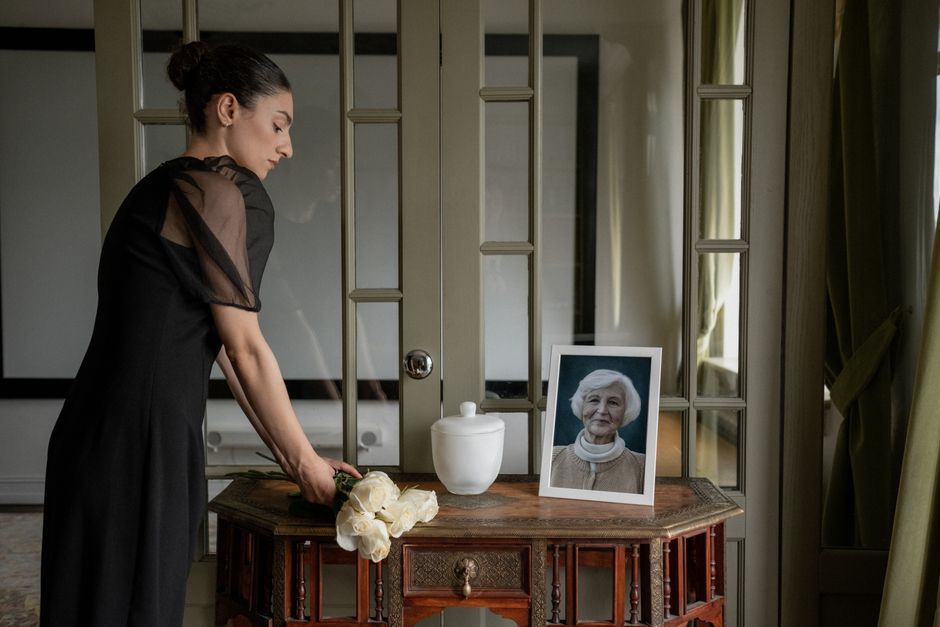
One of the most natural ways to personalize a gravesite is through flowers and plantings that reflect the seasons and the person being remembered. A bouquet of sunflowers in late summer, a spray of holly in winter, or early spring daffodils can all become part of a family's ongoing tradition.
When choosing flowers, it can be meaningful to think about what your loved one treasured. Did they keep a garden? Was there a bloom they always cut from the yard? Bringing those same flowers to their resting place creates a quiet kind of continuity.
It is worth checking with your cemetery about any guidelines for graveside plantings or floral arrangements, as policies can vary. Many cemeteries are glad to help families understand what is possible within the grounds.
Some families also incorporate living plants or seasonal wreaths as a way of marking the turning of the year—a reminder that life, like grief, moves through cycles rather than straight lines.
Permanent Memorial Markers
Beyond flowers and words, a permanent marker offers something enduring: a physical place in the world that says, this person lived, and they mattered here.
Memorial markers come in many forms. Traditional headstones and flat grave markers can be personalized with more than a name and date. Families often choose to include:
- A brief quotation or phrase that captured something essential about the person
- An image or symbol—a bird, a musical note, a mountain range—that reflected a passion or personality
- A term of endearment or a role that defined them: beloved teacher, devoted father, curious wanderer
Some cemeteries also offer additional memorial features such as benches, garden stones, or dedicatory plaques that allow families to create a small, personalized space within the larger grounds. If any of these options interest you, a conversation with cemetery staff can help clarify what is available and what the process involves.
Making the Space Your Own, Over Time
Personalized tributes do not have to be planned all at once. Many families find that their relationship with a loved one's resting place evolves gradually. A marker is chosen in the months after a loss. A tradition of seasonal flowers takes shape the following year. A reading becomes a quiet annual ritual.
There is something reassuring about that gradual unfolding. It mirrors the way grief itself moves—not in one defined event, but in ongoing waves of memory, love, and meaning-making.
The cemetery grounds at Singing Hills Memorial Park are designed with that ongoing relationship in mind. The natural environment is meant to be returned to, walked through, and felt—not only visited once and left behind.
A Note on Planning and Support
If you are in the early stages of thinking about permanent memorialization—whether for a loved one recently lost or as part of your own advance planning—it can be helpful to speak with a knowledgeable professional who can walk you through the options without pressure. Cemetery staff are typically a good first resource for questions about markers, grounds policies, and personalization possibilities.
Whatever shape your tribute takes, the most important thing is that it feels true to the person you are honoring and supportive to the people who loved them.